.png?width=200&height=42&name=f098b2db-9a1e-4efb-9509-53fa66205bbb%20(4).png "NEW DJA logo")
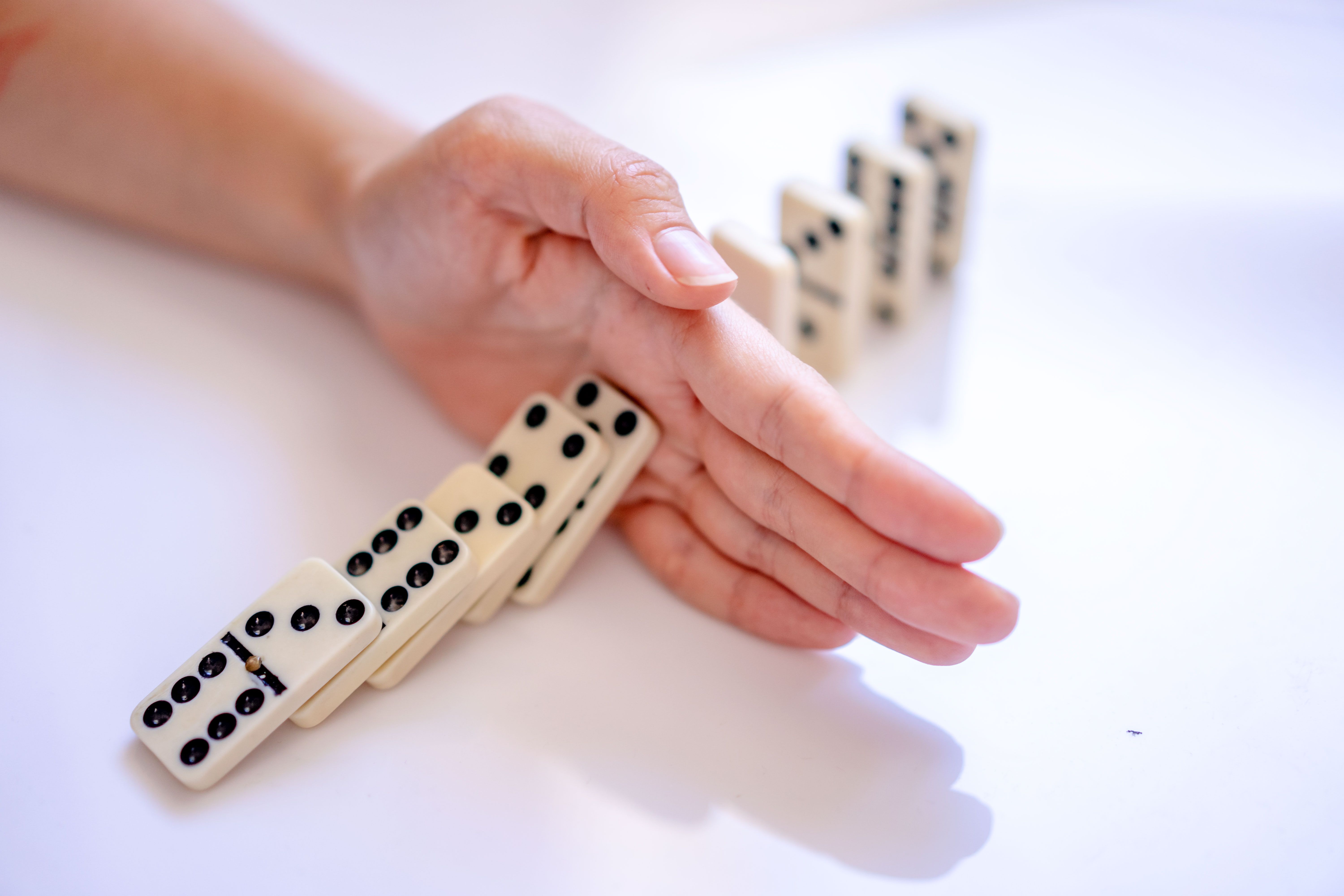
Here is something I have watched play out in organizations for years, and it still catches people by surprise.
We complain about something for months, sometimes for years.
"Nobody knows who to go to to make a decision."
"There's no coordination across departments, and when it does happen, it's fraught with miscommunication."
"Our silos are making it impossible to get work done without twice the effort necessary."
And then, one day, someone with the authority to change it finally steps forward and changes it.
And we push back.
The very thing we asked for arrives — and we dig in our heels. What looks like stubbornness or resistance is loss.
Our brains are wired to feel loss more than gain, and a loss lands about twice as hard as a win of the same size. This is human wiring, not a character flaw. It is survival — we hold on to things, sometimes long past the point when they are serving us well. By then the thing is just familiar. Not good, not right, not effective. So when something shifts, even something we wanted gone, part of us registers the change as a loss and braces against it.
Here is the part that surprises people. The loss we feel is quieter than it looks. From the outside it looks like heels dug in. Inside, it is something far more personal — something about identity. We are glad the old problem is gone. What we are grieving is something else entirely: not being consulted on the decision, not being the one who made it, or the plain familiarity of a situation we did not even like — uncomfortable, but known, and somehow ours.
Is that familiar? Have you ever stayed in an uncomfortable situation for a long time, and found that changing it — even for the better — was still, at first, hard?
Let me give you an example from my own life.
I recently moved from Miami to Nashville. Entirely my choice — I followed my son to college. (Yes, I am that mom.) And I had good reasons. Nashville is beautiful — green, fast-growing, full of music and interesting people, with mountains and hiking trails, and much closer to my family. I chose it, on purpose, for reasons that still make sense to me.
And still — months in — I wake up some mornings and wonder if I made the right call. I know that I did. And I still feel the loss of Miami.
That is the thing about change. Even when it is your decision. Even when it is right. The loss is real anyway.
Now multiply that by an entire organization.
Because here is what makes organizational change so hard: people never experience it the same way, or at the same time. The person who was thrilled in week one may reach month three and suddenly miss something they did not know they would miss — the rhythm of a team they no longer sit with, a project that was theirs, a standing lunch, a parking space. The change can be entirely for the best, and the immediate experience — sometimes the middle stretch, too — still feels like loss.
So if you lead change, hold two truths at once.
The first: the loss is real. People are being human, wired the way we are all wired.
The second: you cannot wait for the loss to disappear before you act. If your standard is that everyone must be happy, on board, and ready before you decide, the decision will never come. It is never true that everyone in an organization feels the same way at the same time. So decision-makers carry an uncomfortable job — to decide, knowing full well that not everyone will be with them yet.
And if you are on the receiving end of a change, here is where I would ask something of you.
Be generous with the people making the hard calls. Especially when the hard call is the one you asked for. So often, the person digging in their heels is the same person who spent months saying something had to change. You wanted a decision. Someone made it. Meeting that with complaints and finger-pointing makes an already-hard thing harder for everyone.
Your input matters — genuinely. Good change makes room for participation, for feedback, for people to be part of it. And it also makes room for leaders to decide without being worn down until they stop deciding at all. Both of those things have to be true.
Because change — and the ongoing work of becoming — is the normal, permanent state of any organization that is still alive. The healthiest teams stop treating each change as an emergency, and start treating growth and iteration as simply how we work.
So here are the questions, for all of us — the deciders and the recipients, which most of us take turns being:
When the next change comes, will you brace against the loss?
Or
Will you make room for it, name it, and choose to keep becoming anyway?
Always becoming,
- DeEtta
Want to build capacity? Start by taking the Sounding
Measure your organizational capacity here: https://assessment.cultureroad.com/sounding
