---
title: The Moment After the Decision
description: Organizational change is disciplined realignment. Discover how vision, strategy, structure, and culture must move together to sustain meaningful transformation.
image: https://blog.deettajones.com/hubfs/ARCHI_1-1.png
---
[.png?width=200&height=42&name=f098b2db-9a1e-4efb-9509-53fa66205bbb%20(4).png "NEW DJA logo")](https://deettajones.com/)
- About
- [About DeEtta Jones](https://www.deettajones.com/about-deetta-jones)
- [Meet the Team](https://www.deettajones.com/deetta-jones-dei-team)
- [Privacy Policy](https://www.deettajones.com/privacy)
- Solutions
- [Calendar](https://www.deettajones.com/upcoming-training-development-programs#course_calender)
- [CultureRoad®](https://cultureroad.com/)
- [Speaking](https://www.deettajones.com/deetta-jones-speaker)
- Resources
- [Blog](https://blog.deettajones.com)
- [CultureRoad® Podcast](https://podcast.cultureroad.com/)
- [Resource Hub](https://www.deettajones.com/resource-hub)
- [Contact](https://info.deettajones.com/contact)
- [Login](https://learn.cultureroad.com/#/login)
# The Moment After the Decision
[organizational culture](https://blog.deettajones.com/tag/organizational-culture), [leadership communication](https://blog.deettajones.com/tag/leadership-communication), [Culture](https://blog.deettajones.com/tag/culture), [ChangeManagement](https://blog.deettajones.com/tag/changemanagement), [Building Trust](https://blog.deettajones.com/tag/building-trust), [Human-Centered Performance](https://blog.deettajones.com/tag/human-centered-performance)
It’s performance review season.
For many managers, this is when the obvious conversations happen. Deadlines that were missed. Projects that stalled. Goals that weren’t met. These are the performance issues most organizations are comfortable naming.
But the behaviors that shape culture most powerfully are often much quieter than that.
They appear in the moment *after* a decision has already been made.
A rationale has been explained. A leadership group has deliberated. A direction has been chosen. And then someone says, in a meeting or a hallway conversation, “I still don’t really see why we’re doing this.”
> *Or, “I guess this is where we’re headed.”*
> *Or simply, “I don’t understand.”*
None of these statements sound dramatic. They don’t violate policy. They don’t rise to the level of HR intervention. In fact, they often sound reasonable—even honest.
But repeated over time, these small behaviors create something that every leader eventually recognizes: cultural drag.
The decision exists on paper, but the organization does not fully move.
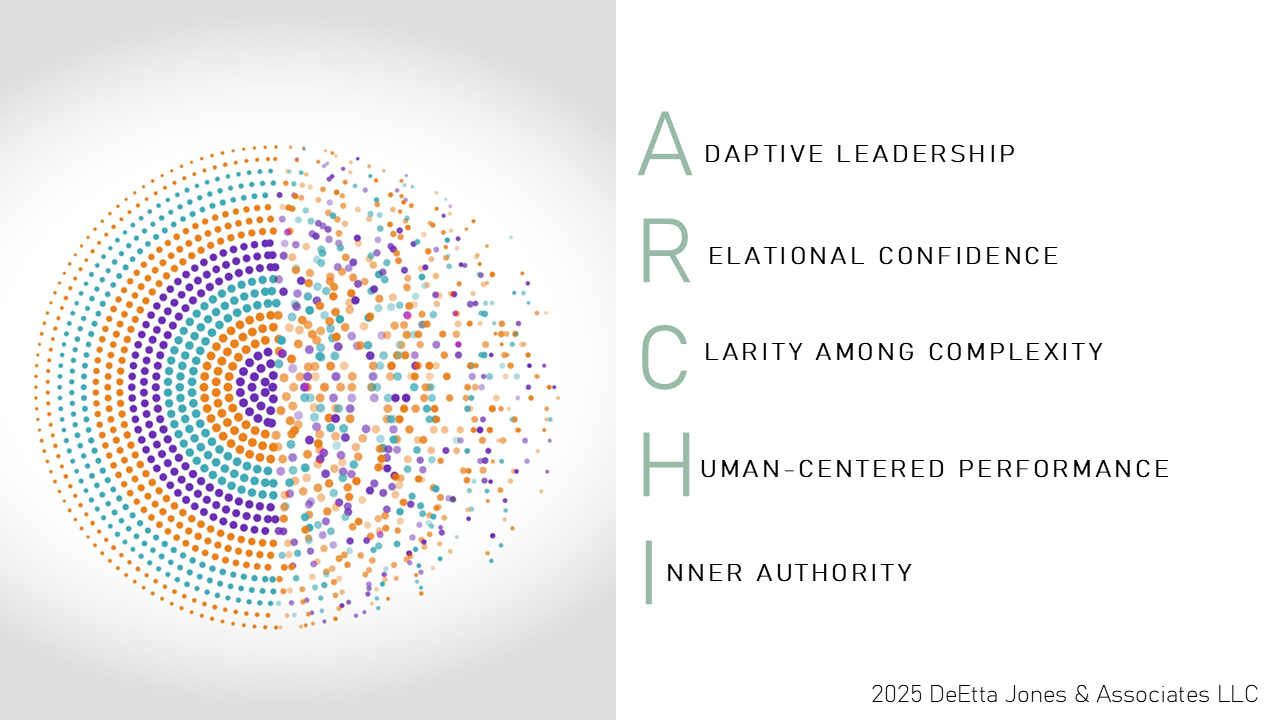
Human-Centered Performance—the **H in the ARCHI framework**—asks leaders to take these moments seriously. Not because disagreement is unwelcome, and not because leaders should expect blind compliance. But because professional maturity requires understanding *when* disagreement belongs and *when* alignment becomes the responsibility of the role.
Healthy organizations absolutely need challenge. Decisions improve when people ask thoughtful questions, offer alternative perspectives, and surface risks leaders might not have considered. That kind of challenge is a sign of care and engagement.
But challenge has a place in the sequence.
It belongs during deliberation.
Once the decision is made, the responsibility shifts.
Implementation requires alignment.
Many organizations never say this explicitly. They assume people will intuitively understand it. But in practice, the absence of that clarity allows a pattern to emerge. A decision is formally made, yet the debate continues in side conversations. Someone repeats their disagreement to colleagues responsible for implementation. Energy begins to thin.
Nothing overtly rebellious is happening. But something important is weakening.
Confidence.
Imagine a familiar scenario. A long-standing initiative is paused so that resources can be redirected toward a new strategic priority. A manager who has invested years in that initiative tells their team,
> *“I still don’t really see why we’re doing this, but I guess we’ll figure it out.”*
The statement may even feel transparent. But its impact is predictable. Staff begin to question the direction. The decision feels less settled. Implementation becomes tentative.
Now imagine a different version of that same moment.
> *“This wasn’t the direction I initially expected,” the manager says. “But the decision has been made, and our responsibility now is to make this shift successful. Let’s talk about what that requires from us.”*
The internal feelings may be exactly the same. The professional behavior is different. And the cultural effect is entirely different.
That difference is the essence of Human-Centered Performance.
Human-centered does not mean avoiding hard truths. It does not mean prioritizing comfort over accountability. It means holding two realities at the same time: people deserve care and dignity, and the responsibilities of a role still matter.
Support, in this sense, is often misunderstood. Support does not mean liking the decision. It does not mean believing it was the best possible option. It simply means that once a legitimate authority has made the decision, the responsibility of the role shifts to enabling its successful implementation.
That includes promoting clarity rather than confusion. Aligning messaging rather than undermining it. Helping colleagues move forward rather than quietly reopening the debate.
The higher the role, the more consequential this shift becomes.
When an individual contributor expresses frustration, it carries one level of impact. When a manager does the same, the signal multiplies. Managers are culture multipliers. Their tone becomes permission. Their ambiguity becomes confusion. Their resistance becomes legitimacy for others to resist.
The opposite is also true. Their steadiness creates stability. Their clarity builds momentum. Their alignment strengthens cohesion.
This is why performance review season matters more than most leaders realize. It is one of the few structured moments when leaders can recalibrate these expectations.
Not by labeling someone “negative” or “resistant,” but by naming the behavior and clarifying the responsibility attached to the role.
A manager might say something like this:
> *“During the decision-making phase, it’s absolutely appropriate to challenge ideas and raise concerns. Once a decision is made, the expectation shifts to visible alignment. I’ve noticed that after recent decisions, some of your comments have created uncertainty for others. I’d like us to talk about what support looks like in your role.”*
That conversation does not suppress disagreement. It simply restores the sequence.
Challenge during deliberation.
Alignment during implementation.
The human side of this dynamic should not be ignored. Ongoing questioning often reflects real experiences—fatigue from repeated change, attachment to a project someone has poured years into, or fear of losing influence. Those realities deserve conversation.
But they cannot quietly sabotage execution.
Human-Centered Performance does not erase emotion. It integrates it, without allowing it to override responsibility.
So as performance reviews begin, leaders might ask themselves a question that rarely appears on evaluation forms.
Not: *Who is underperforming?*
But: *Where is cultural drag quietly forming after decisions are made?*
Because the moment after the decision is where culture is either strengthened—or slowly unraveled.
#### Subscribe to the Blog
#### About Us
**DeEtta Jones & Associates (DJA)** guides leaders and organizations to build capacity, strengthen innovation, and improve organizational performance by cultivating healthy, high-trust cultures where people can do their best work.
[](https://cta-redirect.hubspot.com/cta/redirect/3781544/f2180fee-24f9-41d7-9971-fa4a560c783b)
Recent Posts
[The Difference Between Information and Orientation](https://blog.deettajones.com/the-difference-between-information-and-orientation)
[Why Employees Experience Managers More Than Organizations](https://blog.deettajones.com/why-employees-experience-managers-more-than-organizations)
[Through the Challenging Parts of Your Journey](https://blog.deettajones.com/through-the-challenging-parts-of-your-journey)
[What Happens When the Work Outgrows the Organization?](https://blog.deettajones.com/what-happens-when-the-work-outgrows-the-organization)
[Kind and Firm Management](https://blog.deettajones.com/kind-and-firm-management)
Categories
- [All Categories](https://blog.deettajones.com)
- [leadership](https://blog.deettajones.com/tag/leadership)
- [organizational culture](https://blog.deettajones.com/tag/organizational-culture)
- [Culture](https://blog.deettajones.com/tag/culture)
- [inclusive leadership](https://blog.deettajones.com/tag/inclusive-leadership)
- [leadership communication](https://blog.deettajones.com/tag/leadership-communication)
- [DEI](https://blog.deettajones.com/tag/dei)
Follow Us Online
© 2022 DeEtta Jones and Associates
- [Terms](https://courses.deettajones.com/pages/terms)
- [Privacy](https://courses.deettajones.com/pages/privacy)

```json
{
"@context" : "https://schema.org",
"@type" : "BlogPosting",
"author" : {
"@type" : "Person",
"name" : "DeEtta Jones & Associates",
"url" : "https://blog.deettajones.com/author/admin"
},
"dateModified" : "2026-03-06T20:00:40.940Z",
"datePublished" : "2026-03-06T20:00:40.000Z",
"headline" : "The Moment After the Decision",
"image" : [ "https://blog.deettajones.com/hubfs/ARCHI_1-1.png" ],
"mainEntityOfPage" : {
"@id" : "https://blog.deettajones.com/the-moment-after-the-decision",
"@type" : "WebPage"
},
"publisher" : {
"@type" : "Organization",
"logo" : {
"@type" : "ImageObject",
"url" : "https://blog.deettajones.com/hubfs/CR%20X%20DJA%20Logo%20(2).png"
},
"name" : "DeEtta Jones & Associates"
}
}
```